Chinese intangible cultural heritage · Health qigong
Shaolin NeijingYizhichan
Inner Strength One-Finger Zen, a health practice handed down for centuries
Origins
Neijing Yizhichan is said to have grown out of classical teachings created by the Indian monk Bodhidharma. It was one of the practices Shaolin disciples relied on to ward off fatigue, guard against wild animals, keep fit and protect the temple.
In the late Ming and early Qing dynasties, monks brought it from the Songshan Shaolin Temple in Henan to the Southern Shaolin Temple in Putian, Fujian, about 400 years ago. In the Republican era, Que Ashui of Weitang, Suzhou, became its 18th-generation lineage holder. The practice took root in Suzhou, and he broke with the centuries-old custom of passing it to a single heir, opening it to the public.
About us →
“The movements that look the fewest, the simplest and the most tedious are often the very ones that build real skill.”
What makes it different
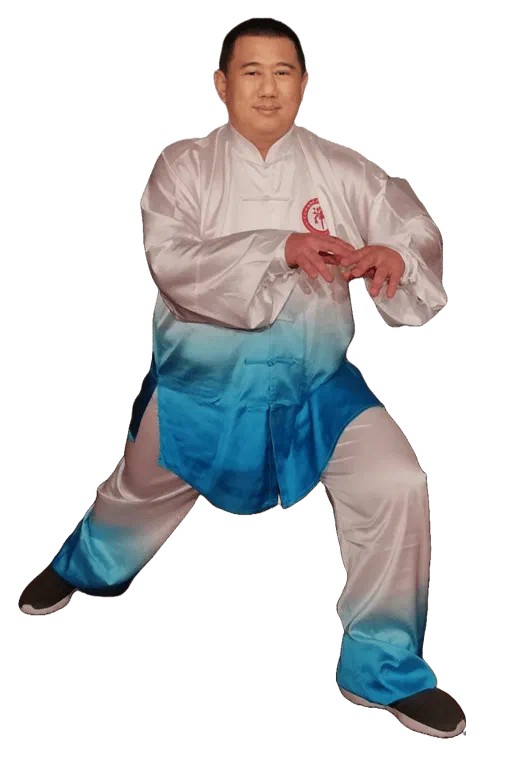
Easy to learn, for young and old. Qi is felt quickly and strongly, without side effects.
No mental focusing is needed, and there are no restrictions on diet, time of day or direction faced.
Correct posture in each stance is strictly required.
Finger movements drive the flow of inner qi, continually rebalancing yin and yang.
Movements are designed to trigger and guide the circulation of inner qi.
Six principles
- Relaxed and natural
- Movement with stillness
- Practice with rest
- Mind and qi as one
- Precise yet flexible
- Step by step