↓ Skip to main content

International Association of Que School Neijing Yizhichan

About Us

A Shaolin health practice with some 400 years of history, taught to us by Master Que Qiaosheng, its 19th-generation lineage holder, and rooted in Malaysia since 2018.

Emblem of the International Association of Que School Neijing Yizhichan

Origin

Inner Strength One-Finger Zen (Neijing Yizhichan) Qigong is believed to be an evolution of classical techniques originally developed by the Indian monk Bodhidharma. It served as one of the core practices for Shaolin disciples, used to combat fatigue, ward off wild animals, maintain physical health and safeguard the temple.

The method was brought from the Songshan Shaolin Temple in Henan Province, China, to the Southern Shaolin Temple in Putian, Fujian, during the late Ming and early Qing dynasties, giving it a history of over 400 years.

In the Republican era, Que Ashui, a native of Weitang, Suzhou, became the 18th-generation inheritor of Inner Strength One-Finger Zen. After returning to secular life, he treated illnesses in his community free of charge. Following the founding of the People's Republic of China, he broke with the long-standing tradition of keeping the method secret and began openly accepting disciples, allowing this once-guarded practice to benefit the wider public.

His eldest son, Que Qiaosheng, continued his father's legacy and mastered the authentic techniques, becoming the 19th-generation successor of Shaolin Inner Strength One-Finger Zen.

Development

Que Qiaosheng, the eldest son of the late Master Que Ashui, is a prominent contemporary inheritor of Inner Strength One-Finger Zen. Over the years, he has organised dozens of rehabilitation and fitness programmes centred on the practice, helping many people recover from both common ailments and more complex conditions.

Thanks to the joint efforts of Master Que Qiaosheng, his disciples and a growing community of enthusiasts, the practice has spread beyond mainland China to Hong Kong, Macau and Taiwan, and widely in countries such as Russia, the United States, Japan, the United Kingdom, Germany, France, Canada, South Korea, Spain, Singapore, Malaysia and Chile.

Intangible Cultural Heritage

  1. 2016

    Inner Strength One-Finger Zen was officially inscribed on the Intangible Cultural Heritage List of Xiangcheng District, Suzhou, by the district's People's Government, affirming its value as a unique and influential part of traditional Chinese culture.

  2. June 2018

    Master Que Qiaosheng was invited by the Guangdong Provincial Hospital of Traditional Chinese Medicine to teach courses there. He also gave free public sessions at Soochow University and Suzhou Municipal Hospital No. 3.

  3. 15 June 2024

    The People's Government of Suzhou recognised Shaolin Inner Strength One-Finger Zen, under the name “Neijing Post Standing Technique” (内劲站桩功), as a municipal-level Intangible Cultural Heritage item in the category of Traditional Sports, Recreation and Acrobatics.

How the Association Began

Shaolin Inner Strength One-Finger Zen, a Chinese health practice with nearly 400 years of history, was introduced to Malaysia in the 1990s. Keeping the teaching authentic proved difficult: without proper guidance, clear understanding and correct insight, practice can easily drift from the true path.

To return to the source, Mr Lee Yau Chun An, Madam Gin Lee Ping and a group of fellow practitioners travelled to Weitang Town, Xiangcheng District, Suzhou, on 25 October 2017, to study under Master Que Qiaosheng, the 19th-generation lineage holder.

In a ceremony at the ancestral home of Grandmaster Que Ashui, the 18th-generation master, they knelt before Master Que Qiaosheng and formally became his disciples. Having been taught the authentic techniques in person, they resolved to bring Que School Inner Strength One-Finger Zen to Malaysia.

Malaysia's first group of disciples completed their training in Suzhou in October 2017. With Master Que's support and authorisation, the International Association of Que School Neijing Yizhichan was established on 21 December 2018.

Lineage Holders

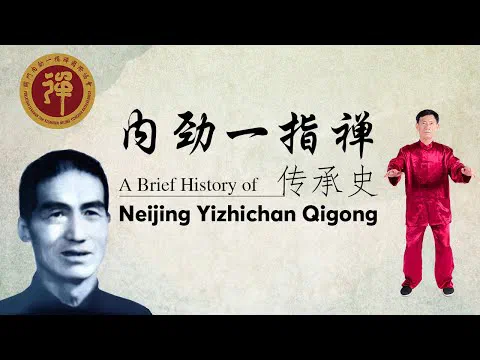
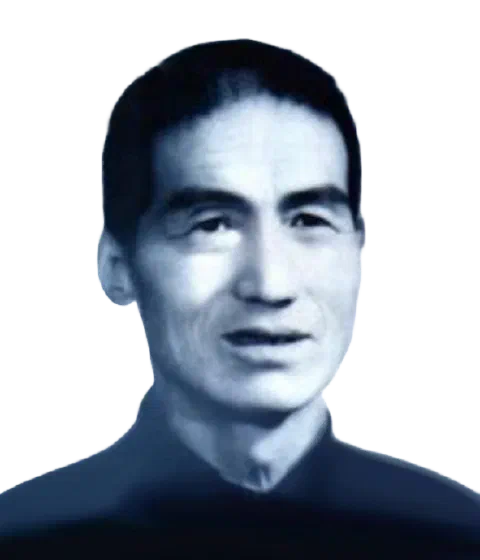
Que Ashui

18th generation

Que Ashui

阙阿水 · 1919–1982

18th-generation lineage holder of Shaolin Inner Strength One-Finger Zen

  • Born in Weitang, Suzhou. He trained in martial arts from childhood and entered the monastery at seven, studying under three 17th-generation Southern Shaolin masters: Du Shunbiao, Du Shenbiao and Du Yanbiao.
  • After eighteen years of rigorous practice, he became the 18th-generation lineage holder.
  • He travelled widely, offering free treatment and earning a reputation as a “miracle doctor”.
  • After 1949 he taught openly, breaking the tradition of secrecy and saving the art from being lost.
  • In 1978, working with Professor Lin Yagu of Shanghai, remote-sensing instruments detected infrared radiation from the Laogong point in practitioners' palms; the findings were recorded in the China Encyclopedia Yearbook.
  • His disciples went on to found several new schools, such as Kongjin Qigong, Taiji Qigong Eighteen Methods and Mudra One-Finger Zen.
Que Qiaosheng

19th generation

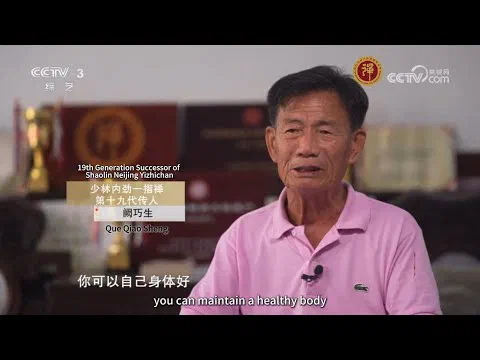
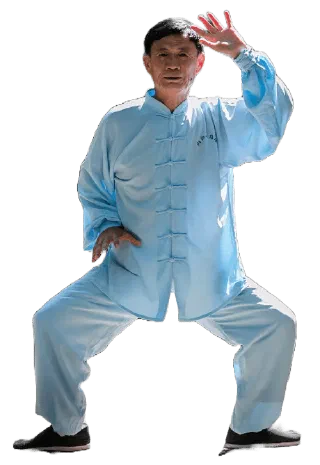
Que Qiaosheng

阙巧生 · 1952–

19th-generation lineage holder of Shaolin Inner Strength One-Finger Zen

Intangible Cultural Heritage Inheritor, Suzhou

  • Eldest son of Que Ashui. He trained under his father from early childhood and is a leading contemporary qigong master.
  • Author of Inner Strength One-Finger Zen, Shaolin Inner Strength One-Finger Zen and Luohan Divine Skill.
  • Set up a research and heritage centre with Soochow University and has published numerous academic papers.
  • Regularly invited to teach and treat patients in Singapore, Malaysia, Hong Kong and beyond.
  • His students around the world have made notable contributions to rehabilitation and health.
Lee Yau Chun An

20th generation

Lee Yau Chun An

廖俊安

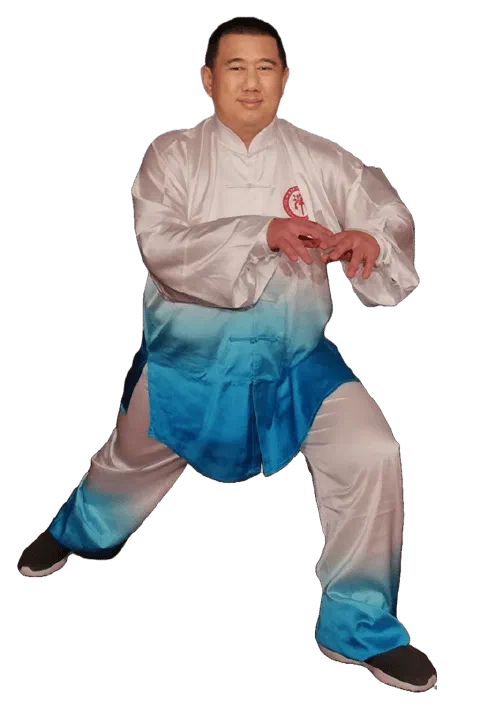
Founding President, International Association of Que School Neijing Yizhichan

20th-generation disciple of Shaolin Inner Strength One-Finger Zen

  • Seeking better health, he turned to traditional practice. Once he had recovered, he vowed to bring the practice back to Malaysia for the benefit of all.
  • In 2017 he travelled to Suzhou and formally joined the Que lineage through the traditional kowtow ceremony.
  • With strong support from fellow practitioners, the association was approved and registered on 21 December 2018.
  • Under his leadership it has grown from about a dozen members to a presence across several Malaysian states, and on to Australia, Canada and Peru, with hundreds of students and members.

Videos